Limitations of Synthetic Data Generation in Specialized Data-Scarce Domains
Edward Zhang et al. arXiv:2608.13729, 2026 · First author
I'm a
I’m a third-year Ph.D. student in Computer and Information Science at the University of Pennsylvania’s GRASP Laboratory, advised by Eric Eaton and Dan Hashimoto. I am an NSF Graduate Research Fellow. My research sits at the intersection of computer vision, robotics, multimodal foundation models, and generative learning, with a particular interest in specialized, data-scarce, and safety-critical environments.
Many machine-learning methods assume that representative data can be collected when needed. In safety-critical settings, important examples may instead be intrinsically scarce: severe injuries, genuinely rare events, or events that have not happened yet. I study the features that make these sparse examples distinct and how to expand those regions of a distribution. This also means asking what foundation models do not already represent: when abundant examples exist, simple discriminative models can often learn the concept. My current work explores more targeted retrieval, generation, and data expansion without merely memorizing scarce examples.
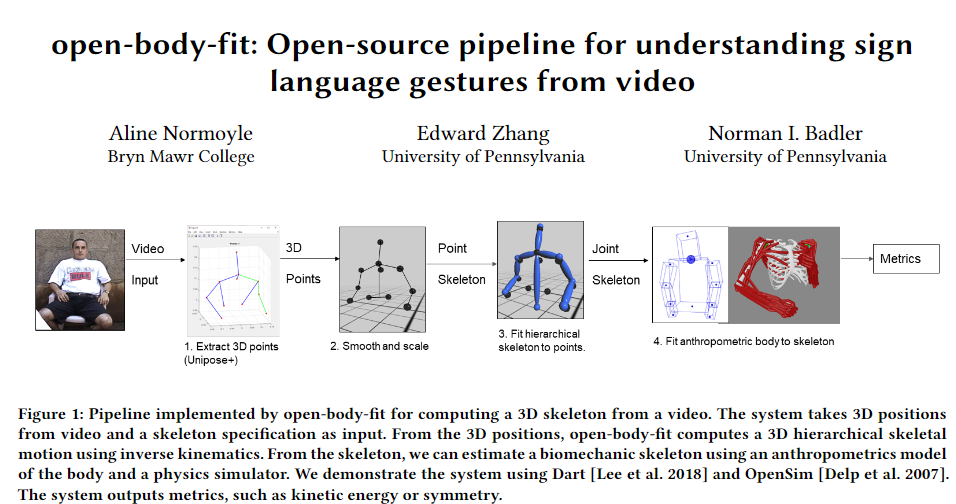
Selected work on robotic triage, specialized visual recognition, and embodied perception.
Edward Zhang et al. arXiv:2608.13729, 2026 · First author
Jason Hughes, Marcel Hussing*, Edward Zhang*, et al. arXiv:2512.08754, 2025 · *Equal contribution
Edward Zhang, Marcel Hussing, Jason Hughes, et al. AAAI-25 Workshop on Artificial Intelligence in Healthcare, 2025
CVPR 2024
MIG 2022 poster
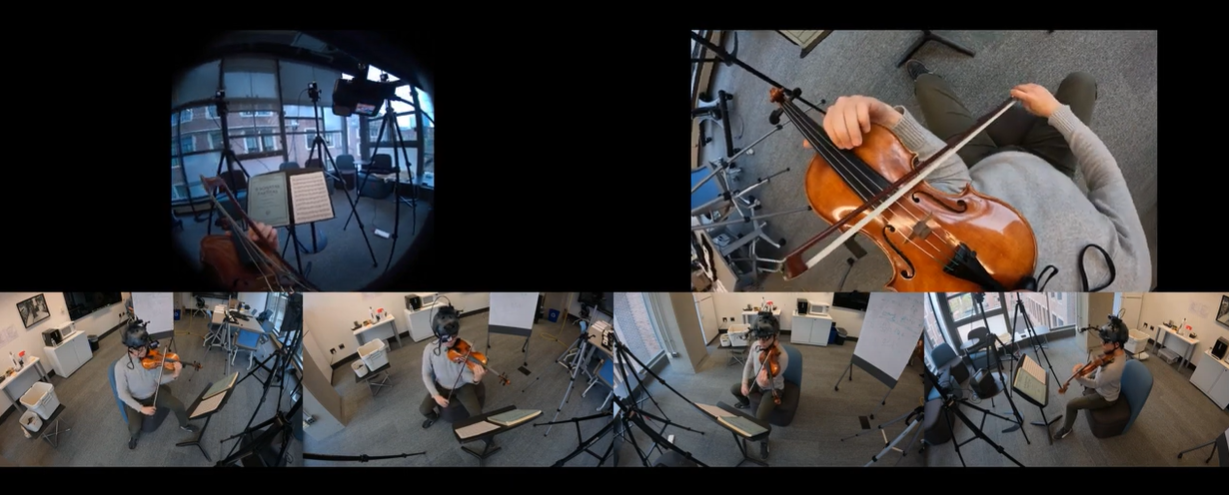
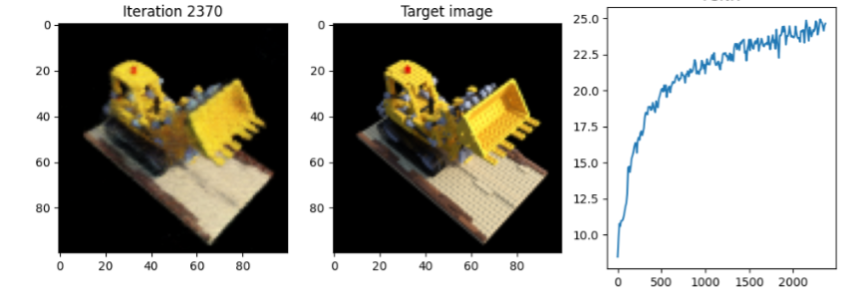
Current work in robotic perception and data-scarce vision, followed by earlier work in embodied data collection, neural rendering, graphics, and game development.
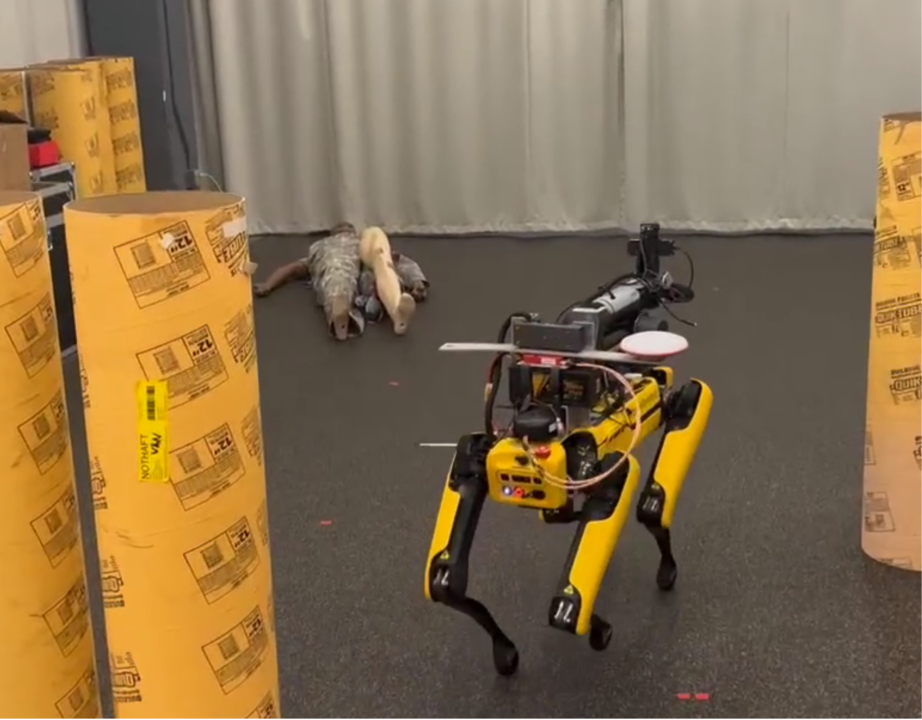
Developing perception for autonomous casualty assessment and triage: body-part perception, injury classification, trauma understanding, and alertness-related perception. I work with conventional vision models and VLMs; deploy ROS/ROS2 and Dockerized components on real robotic platforms; work with field data, sensors, and hardware constraints; coordinate technical resources; and mentor approximately four master’s students.
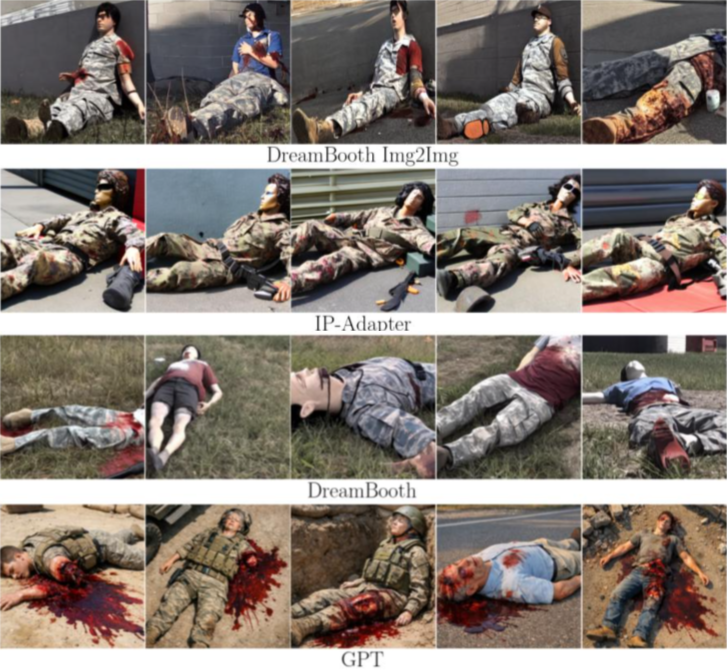
First-author work benchmarking generative and conventional augmentation for specialized trauma recognition on held-out real images. I examined distribution shift, memorization/collapse, and overly canonical synthetic examples; the evaluated generative methods did not consistently exceed a strong non-generative baseline. Ongoing work asks how to target the features that define sparsity without memorizing scarce examples.